Roof leak repair
A roof leak that keeps coming back after the storm has passed is traced to the flashing, pipe boot or shingle that lets the water in, and fixed there rather than at the stain.
roof leak repair in LittletonEmergency service · Homes & businesses
Water coming in? Stop it first, fix it properly second. Emergency roof repair covers the open roof, most often with a tarp, so no more water gets in, and the lasting repair follows once the roof is dry and safe to work on.
Mon–Sat, 7 am to 6 pm. After hours, leave a message and we call back the next working morning.
 Tarp and battens
 After the storm
Who to call
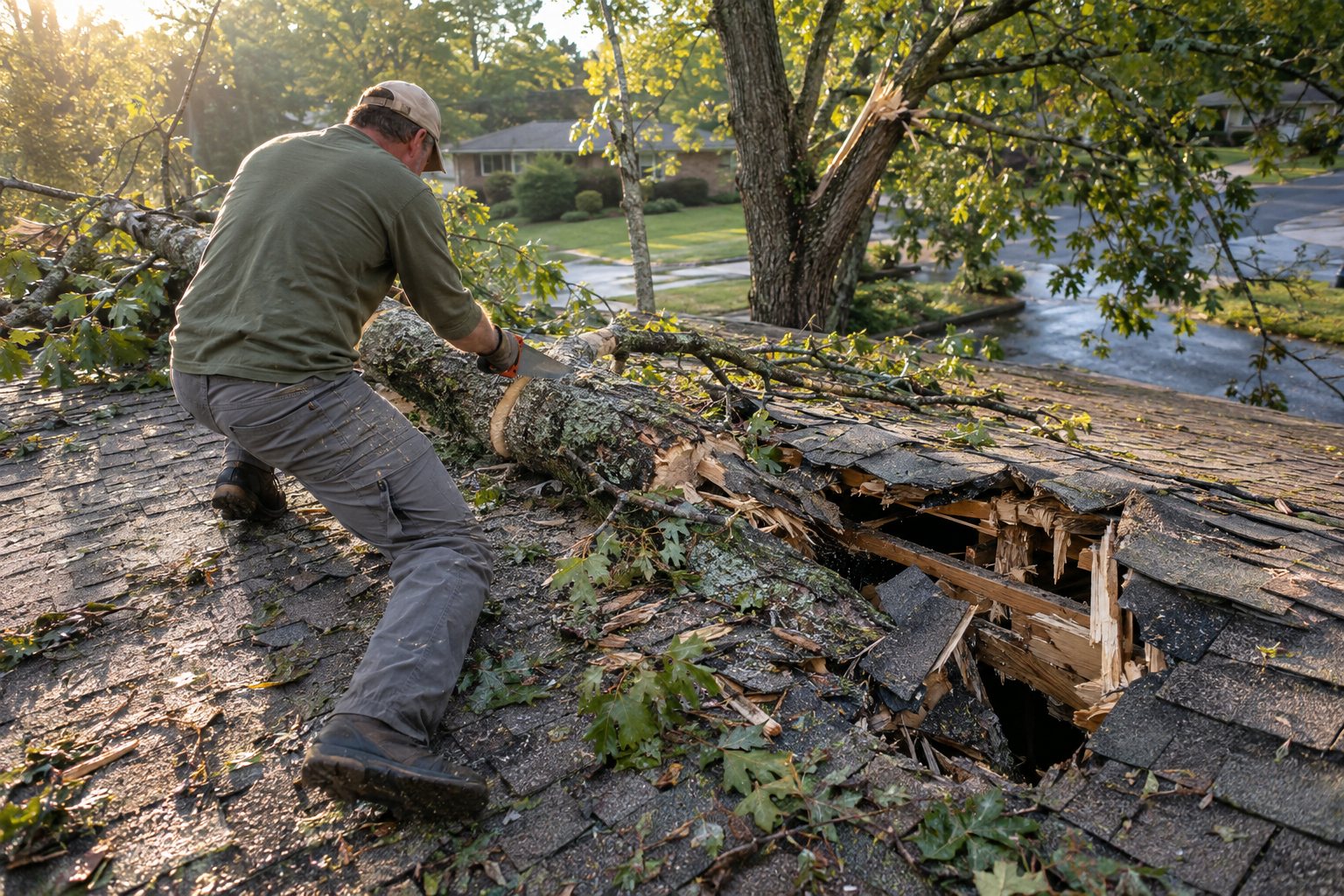
Mountain Range Roofing does emergency roof repair on residential and commercial roofs, homes and businesses alike, in Littleton and the towns around us: hail and wind damage, a limb through the roof, flashing torn loose, or a leak that has suddenly turned into a steady drip.
We look at the whole roof, not only the hole you can see, and we quote the whole job before we start, with no surprise charges after. When the work is done, we clean up.
Before we get there
Nobody should climb onto a wet or damaged roof, everyone should stay clear of a sagging ceiling, and the power to rooms under an active leak should be shut off.
A wet, damaged or unstable roof is where falls happen, and OSHA's fall protection guidance counts falls among the most common causes of serious work injuries. Look from the yard or the attic instead.
A bulge overhead can be holding trapped water or hiding structural damage. Keep people and pets out of the room below it.
Switch off the breaker for any room where water is reaching lights, outlets or wiring, to prevent shocks.
Get furniture, electronics, rugs and boxes out from under the drip, and photograph anything that already got wet.
Set buckets and towels under the drip and dry what got wet as fast as you can; the EPA guide to mold and moisture explains why quick drying matters.
 Covered until the repair
Making the roof safe
In an emergency the damage is assessed and photographed first, then the area is stabilized, often with a tarp over the exposed section, and the immediate problem is fixed before anything else.
The roofer checks the damage from the roof and from the attic and takes photos before anything is covered, so there is a record of what the storm or the limb did.
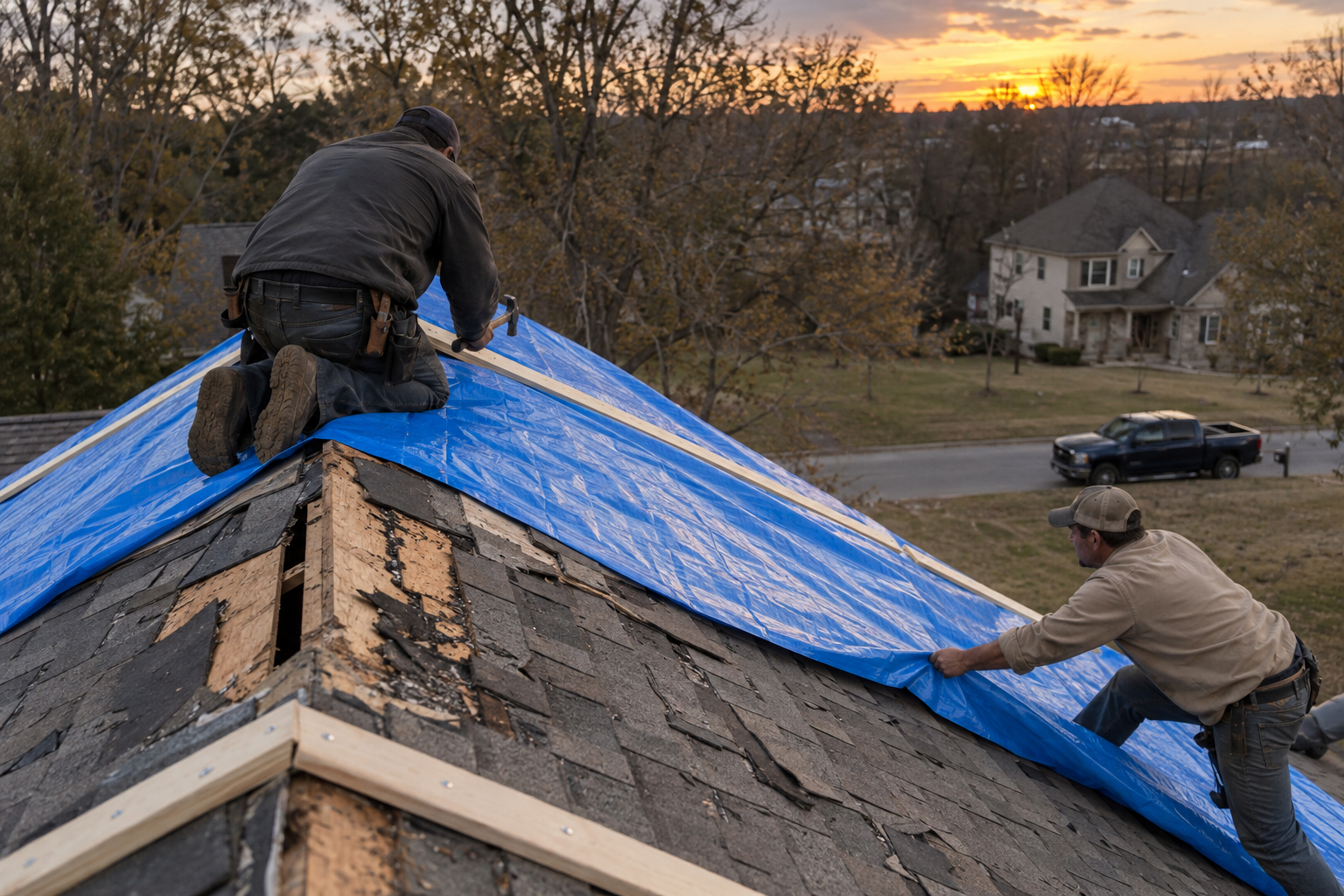
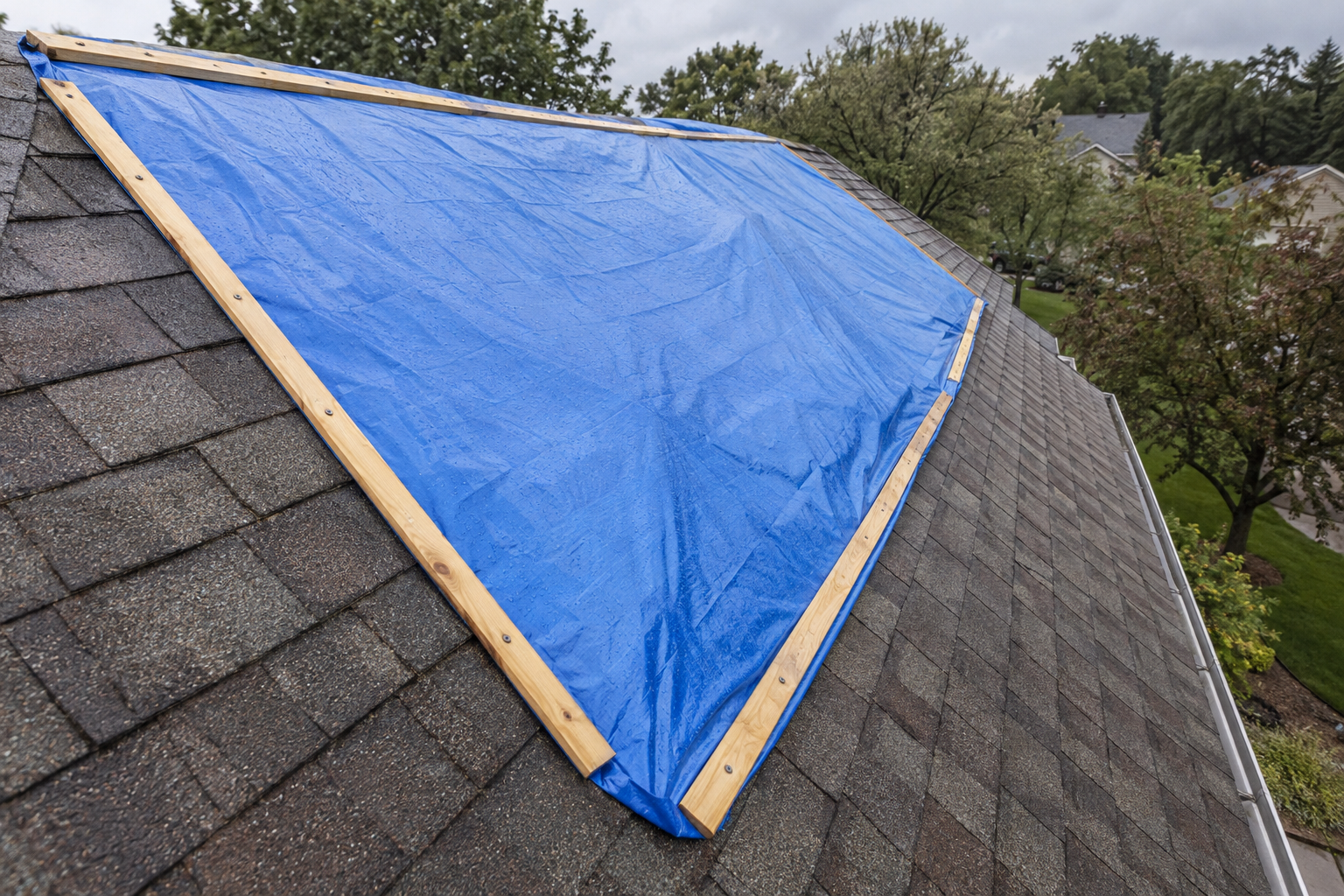
"Tarping" lays a tarp over the exposed area and fastens it down, usually with battens along its edges, to keep water out until permanent repairs can be made.
Whatever is letting water in today gets dealt with first, even when that fix is short-term, so the house stops taking on water.
Soaked drywall, insulation and flooring inside the house are restoration work, a separate trade from the roof. Restoration crews can hold IICRC certification.
After the tarp
A tarp or any other short-term fix is temporary, and it has to be followed by a permanent repair once the roof is dry and safe to work on.
When the weather clears, the damaged area is repaired properly: broken shingles replaced, torn "flashing" (the metal at chimneys, valleys and walls) refit, and any wet or broken "roof deck" under the hole cut out and renewed. Then the tarp comes off for good.
Fixing a problem now is usually cheaper than fixing it after the next storm, so the permanent repair is worth booking as soon as the roof has dried out.
Free and in writing, before any work starts.
Google review
This is what a homeowner wrote on Google about a roof repair after a hail storm.
Upstanding citizen and did an excellent job repairing my roof after the recent hail storm. Dave is a great guy and got my roof done in a timely manner and I couldn’t be happier!
Once the roof is safe
Roof leak repair and our other roof services each have their own page, with what the work involves and when it is the right call.
Tell us where the water shows and what happened, and we will tell you what to do until the roof is covered. The estimate for the permanent repair is free and in writing.
We answer the phone or call back the same working day, and we show up when we say we will.